There is a quiet war in most companies right now over one question: should we build our own AI, or buy a tool? It gets framed as a matter of principle, engineering teams itching to build, procurement pushing to buy, everyone with a strong opinion. And that framing is exactly the problem, because build vs buy is not a belief system. It is a decision you make one workflow at a time, and the right answer changes from workflow to workflow inside the same company.
Get this wrong in either direction and it is expensive. Build everything and you pour engineering time into reinventing tools you could have licensed for a rounding error. Buy everything and you hand your competitive edge to a vendor every one of your rivals can also buy. The goal is to know, for each specific thing, which side of the line it falls on.
The core rule, in one line
Strip away the noise and it comes down to this:
Buy the commodity. Build the differentiator.
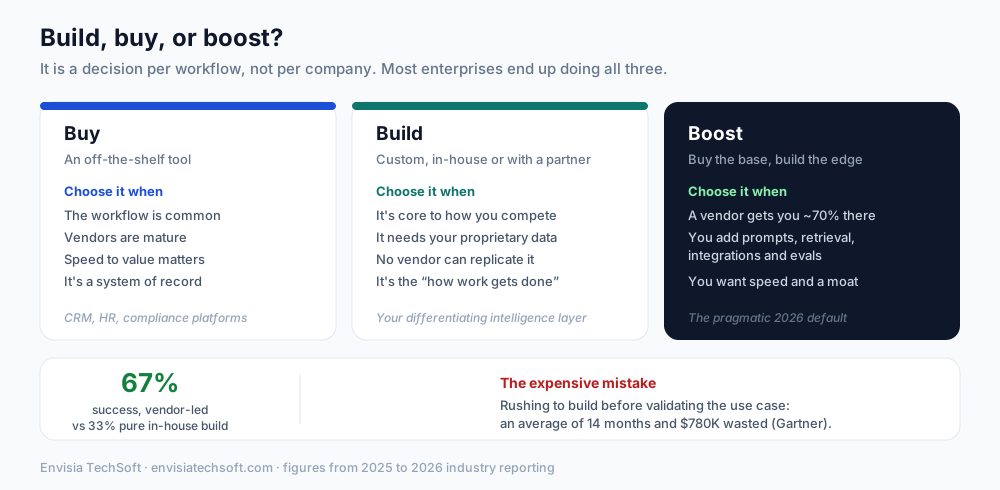
If a workflow is common across companies, if mature vendors already solve it well, and if speed to value matters, buy it. You are paying for decades of edge cases, audits, integrations, and support that you would otherwise have to build and maintain yourself. Systems of record, compliance platforms, standard productivity tools, these are almost always a buy. Nobody wins by building their own CRM.
If a workflow is core to how you actually compete, if it depends on proprietary data no vendor can replicate, or if it is genuinely "how work gets done" in your specific business, that is a candidate to build. This is your differentiating intelligence layer, and handing it to a vendor means handing the same capability to everyone else who writes them a cheque.
Five questions that decide it
For any given workflow, run it through five factors. They will point you to an answer faster than any debate.
- Complexity. Is this a well-understood problem vendors have solved, or something genuinely novel to your business?
- Time to value. Do you need it working this quarter, or can you invest in a build that pays off over a year?
- Risk profile. How much does a failure or a compliance gap cost you? High-stakes, heavily-audited workflows often favour a mature vendor.
- Integration footprint. How deeply does it need to plug into your proprietary systems and data? Deep integration tilts toward build or boost.
- Long-term strategic value. Is this a source of competitive advantage, or table stakes everyone has? Advantage is worth building; table stakes are worth buying.
| Lean Buy when | Lean Build when |
|---|---|
| The workflow is common | It's core to how you compete |
| Vendors are mature | It needs your proprietary data |
| Speed to value matters | No vendor can replicate it |
| It's a system of record | It's your "how work gets done" |
| Low strategic differentiation | High strategic differentiation |
The honest numbers on building
Building is seductive, and the data is a useful cold shower. Custom enterprise AI platforms typically run 300,000 to 1.5 million dollars or more upfront, and that headline cost is the smaller half of the story. The real figure is the three-year total cost of ownership: engineering time, ongoing maintenance, model update costs, data quality investment, observability, governance, and the opportunity cost of the team not doing something else. For a lot of productivity use cases, building only breaks even against buying somewhere around 18 to 24 months in.
The success rates are sobering too. Vendor-led AI projects report roughly 67% success, while pure internal builds land closer to 33%. And the classic failure is not a technical one, it is building the wrong thing: companies that rushed to build before validating the use case wasted, on average, 14 months and 780,000 dollars in sunk costs, according to Gartner. This is the same pattern behind why most AI pilots fail, and it applies doubly when you are building from scratch.
None of this means "never build." It means build with your eyes open, and only where the payoff justifies the burden.
The answer most teams land on: boost
Here is the option the "build vs buy" framing hides, and it is where most successful enterprises actually end up. Call it boost, or the hybrid path. A vendor platform gets you about 70% of the way, and then you build the last, differentiating 30% on top: custom prompts, retrieval over your own data, integrations with your systems, an evaluation harness, and human-in-the-loop controls where it matters.
Boost is the pragmatic default because it captures the best of both. You get the vendor's speed, maturity, and support on the commodity foundation, and you build a genuine moat on the part that is actually yours. You are not reinventing the wheel, and you are not shipping the same undifferentiated product as everyone else. The 2026 posture, in practice, is "yes to both": buy the systems of record and compliance-heavy platforms where you are paying for decades of hardened edge cases, and build the intelligence layer, the copilots, the agentic workflows, the decision support, that make your company specifically better.
A simple way to decide this quarter
You do not need a strategy offsite. For each AI workflow on your list:
- Ask if it is commodity or competitive. Commodity leans buy. Competitive leans build or boost.
- Run the five factors. Complexity, time to value, risk, integration depth, strategic value. Let them point.
- Default to boost for anything in the middle. If a vendor gets you most of the way, take it and build the differentiating edge on top rather than starting from zero.
- Validate before you build. Never commit engineering months to a custom build until you have proven the use case actually delivers value, ideally with a bought tool first.
The companies winning with AI are not the purists on either side. They are the ones who buy ruthlessly where it is commodity and build precisely where it is theirs, and who know, workflow by workflow, which is which.
This is a decision we help leadership teams make, and it is also why Envisia does both: we train your people and build the custom pieces where buying will not cut it. If you are weighing a build against a buy right now, talk to us before you commit the budget.
Sources
Frequently asked questions
- Should we build or buy our AI solution?
- It depends on the specific workflow, not your whole company. Buy when the workflow is common, vendors are mature, and speed matters. Build when the capability is core to how you compete or depends on proprietary data no vendor can replicate. Most enterprises do both: buy the commodity systems and build the differentiating layer.
- How much does it cost to build custom AI?
- Custom enterprise AI platforms typically run from $300,000 to $1.5 million or more upfront, and the real number is the three-year total cost of ownership: engineering time, maintenance, model updates, data quality, observability, and governance. Many productivity use cases take 18 to 24 months to break even against simply buying a tool.
- Is it riskier to build AI in-house?
- The data suggests yes for most teams. Vendor-led AI projects report around 67% success, while pure internal builds sit near 33%. Companies that rushed to build before validating the use case wasted an average of 14 months and $780,000 in sunk costs, according to Gartner.
- What is the hybrid or 'boost' approach to AI?
- Boost means buying a vendor platform that gets you roughly 70% of the way, then building the last differentiating piece on top: custom prompts, retrieval over your own data, integrations, evaluation, and human-in-the-loop controls. It combines speed with a defensible edge, and it is the pragmatic default most enterprises land on in 2026.