Big-company AI stories tend to be useless if you run a small business. You don't have a machine-learning team, you don't have six figures to spend on a pilot, and you definitely don't have time to babysit a science project. What you have is a handful of people doing too many things, and a nagging sense that some of it should be automatable by now.
Good news: in 2026 a lot of it is, and the tools that do it are cheap and code-free. The trick is to ignore the flashy stuff and go straight for the boring, repetitive work that quietly eats your week. That's where the money is.
Where the savings actually come from
The mistake small businesses make is trying to automate something ambitious and novel. The teams that get real returns do the opposite: they automate the dull, high-frequency tasks that happen every single day. According to 2026 SMB data, this kind of automation cuts manual work by 30 to 50%, and 58% of small businesses using AI report saving more than 20 hours a month.
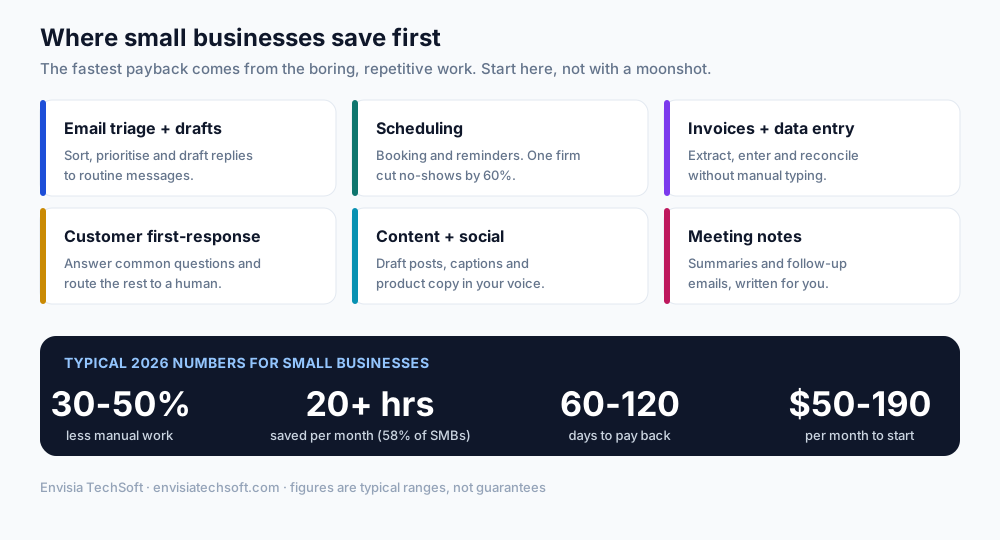
The highest-return automations are almost always these, and none of them are exotic:
- Email triage and drafting. Sorting incoming mail, flagging what's urgent, and drafting replies to the routine stuff you answer the same way every time.
- Scheduling. Booking, confirmations, and reminders. One financial advisor cut 40 minutes of scheduling back-and-forth a day, and reminders dropped no-shows by 60%.
- Invoices and data entry. Pulling numbers off documents and into your system, so nobody's retyping them.
- Customer first-response. Answering the common questions instantly and routing the genuinely tricky ones to a human.
- Content and social. Drafting posts, captions, and product descriptions in your own voice.
- Meeting notes. Summaries and follow-up emails written automatically after every call.
Notice the theme. Every one of these is a task you already do, that follows a pattern, and that nobody enjoys. That's the sweet spot.
What it costs, and when it pays back
Here's the part small business owners actually want, stated plainly. You can get a useful AI stack running for $50 to $190 a month. A typical setup:
| Piece | Tool examples | Rough cost |
|---|---|---|
| The AI brain | Claude Pro or ChatGPT Plus | ~$20 / month |
| Workflow automation | Zapier, Make.com | $20 to $70 / month |
| Customer messaging | AI-assisted support tools | $0 to $100 / month |
That's the light-touch version, and it's where almost everyone should start. If you later want custom-built automations, expect a one-off setup in the low thousands rather than the hundreds of thousands big-company stories quote.
The payback is fast. Most small businesses recoup the cost in 60 to 120 days, and a lot of them see 300 to 400% return on investment within the first year. The reason it's so quick is simple: you're trading a small monthly fee for hours of a person's time every week, and that maths works out almost immediately.
There's an upside beyond cost, too. McKinsey's research suggests AI in marketing and sales lifts revenue by 10 to 20%. For a business doing $500,000 a year, even a conservative 10% is $50,000 you didn't have before. Automation cuts costs on one side and can grow the top line on the other.
A sensible way to start (without breaking anything)
Don't try to automate your whole business in a weekend. That's how you end up with a tangle nobody trusts. Do this instead:
- Track your week for a few days. Write down the tasks that repeat and that you'd happily never do again. Your automation list is hiding in that log.
- Pick the single most annoying, most frequent one. Just one. Usually it's email or scheduling.
- Automate it with a no-code tool. Zapier, Make, and the AI features now baked into tools like HubSpot let you wire this up without a developer.
- Keep a human in the loop at first. Let the AI draft, and have a person approve before anything goes out. Trust is earned; give it a couple of weeks.
- Measure the hours saved, then do the next one. Once you've proven it on one task, the second and third are easy, and you've got real numbers to justify them.
That last point matters. Start with one workflow, prove it saves time, and expand from there. It's boring advice and it's the advice that works, because it builds confidence and avoids the big-bang rollout that so often collapses.
The mistakes to avoid
Three traps catch small businesses most often:
- Automating a broken process. If a workflow is a mess, automating it just makes the mess faster. Tidy it up first, then automate.
- Going fully hands-off too soon. Keep review in the loop until the AI has earned your trust on that specific task. Then loosen the reins.
- Chasing the shiny thing. The custom AI product can wait. The email triage that saves your team five hours a week can't. Do the unglamorous, high-frequency stuff first.
The bottom line
AI automation for a small business isn't about replacing your people. You don't have people to spare. It's about giving the people you have their time back, so they can do the work that actually grows the business instead of drowning in admin. It's cheap to start, it pays back in weeks, and the barrier to entry has never been lower.
Pick one annoying, repetitive task this week. Automate just that. You'll be surprised how quickly the case for the next one makes itself.
Sources
Frequently asked questions
- How can a small business use AI to cut costs?
- By automating the boring, repetitive, high-frequency work rather than chasing something ambitious. The highest-return automations are email triage and drafting, scheduling and reminders, invoice processing and data entry, customer first-response, content and social posts, and meeting notes. This kind of automation typically cuts manual work by 30 to 50%.
- How much does AI automation cost for a small business?
- You can get a useful AI stack running for about $50 to $190 a month: an AI assistant like Claude Pro or ChatGPT Plus at roughly $20, workflow automation via Zapier or Make at $20 to $70, and customer messaging tools from $0 to $100. Custom-built automations are a one-off in the low thousands, not the hundreds of thousands big-company stories quote.
- What should a small business automate with AI first?
- Start with the single most annoying, most frequent task, which is usually email or scheduling. Automate just that one workflow with a no-code tool, keep a human reviewing the output at first, measure the hours saved, and only then move to the next. Automating one broken process well beats automating ten badly.
- How long until AI automation pays for itself?
- Most small businesses recoup the cost in 60 to 120 days, and many see 300 to 400% return within the first year. The payback is fast because you are trading a small monthly fee for hours of a person's time every week.